Saturday, August 27, 2022

An Encomium for Carmen

 At the close of Teatro Campesino’s 1972 film “Los Vendidos/The Sellouts,” originally a play written by Luis Valdez, a menagerie of stereotyped ethnic Mexicans — e.g., an “esa” and a pachuco cruising in a classic 1950s-era Fleetline, a Frito Bandito-like Mexican revolutionary, a monolingual Spanish-speaking housewife who serves her viejo Kool-Aid, campus militants, and a Spanish conquistador — gather around Luis’s character, a somnolent “Mexican peon.”


Before the final scene, Ms. Jimenez (who stressed her Anglicized surname as “Ms. Gym-eh-Nez,” as opposed to “Hee-meh-nez”), a factotum from the governor’s office, presumably of California, procured a Chicano, named Eric (not Kiki, the endearing cognomen used by his peers) whose assignment was to masquerade as a business attired, college-educated, fluently bilingual, “made in the U.S.A,” Mexican-American. 

After attaining the attention of the cast, who moaned and stretched from their fixed poses, Luis lays out a map on the floor of Honest Sanchos Used Mexican Shop. Then he pointed out, “We got Chicanos infiltrated in every urban center in the U.S.: Los Angeles, San Francisco, Denver, Chicago, New York, Washington, Rumford, Maine.” 

Yes. Even in Rumford, Maine! 

For me, Ventura County Supervisor Carmen Ramirez was such a Chicana who had infiltrated the power structure of landed dynastic families and capitalist interests to fight on behalf of our community — ethnic Mexicans and other historically underserved peoples that included lumpen proletariat, poor whites — on various boards, councils, and bodies dominated by male and female Anglos.


As an educator succinctly memorialized on social media, Carmen was “our champion” as we knew she was watching out for us — La Raza/the people. 

As the daughter of a WWII US Army veteran, our querida Carmen grew up in the East Los Angeles community of Pico Rivera and came of age during the fervor of El Movimiento Chicana/o. She navigated circles of renowned groups and figures of that time. One included Oscar Zeta Acosta (aka the Brown Buffalo); the once assimilated, self-loathing Mexican American who worked as a legal-aid attorney in Los Angeles only to find himself caught up in the zeitgeist of the late 1960s and ’70s. 

Carmen also was well connected to civil rights activists like Alice Greenfield McGrath, the once executive secretary of the Sleepy Lagoon Defense Committee as well as United Farm Workers movement organizers, ascending and arrived politicians, and the intelligentsia. 

After her education at Cal State LA, Carmen was admitted to Loyola Law School after Acosta, Los Católicos Por La Raza, and Chicana/o regulars jammed up Cardinal James McIntyre and the archdiocese in 1969 for its hubristic institutional neglect of the needs of the ethnic Mexican community. Carmen understood that the militantly-righteous trouble of El Movimiento had busted open doors to improve the life chances of los de abajo, the hoi polloi, of our society and that she was one of its beneficiaries.

Hence, she paid forward this obligation with sophistication as a citizen-professional in solidarity with her community. 

As a politician, however, Carmen did not publicly pronounce her Chicana identity as it would have been unwise to do so. But her friends knew she was a nueva Chicana as she cunningly demonstrated, without fail, a commitment to advancing the interest of the underdogs. As I write, I am reminded of her fierce defense of her people as a private citizen and elected official against gas, electric, and oil companies who dared not contaminate or compromise the safety of more affluent, whiter communities with their ventures, but for them poor, predominantly brown areas were open game. 

And knowing that education was a weighty mace against such injustice, over the past twenty years Carmen committed herself to California State University Channel Islands’ development, even before the appointment of its earliest tenure-track faculty starting in 2001.  

I got to know Carmen when she was a member of the university’s community advisory committee. As she did as an Oxnard councilmember, Mayor Pro Tem, and county supervisor, she made certain, in her signature diplomatic yet powerfully measured manner that Ventura County’s only public university would have a faculty, curriculum, and programs that equitably served and reflected the interests of the demographic makeup of its service area. 

For example, in 2005, when presumptuous functionaries of CSU Channel Islands decided to strike the BA degree in Chicana/o Studies from its academic master plan, Carmen attended a campus conversation of administrators, students, staff, and faculty. After listening to the views in support of Chicana/o Studies and others for a milquetoast multicultural program, Carmen spoke.

With a poetic equanimity, she asked, as a CSU alum, why this was an issue when just about every campus in the system had Chicana/o Studies. This was a huge intervention that aided Chicana/o Studies' ultimate institution. 

Later, Carmen would attend events of CSU Channel Islands’ Chicana/o Studies Department: an open house, exhibits, lectures, and ceremonies. From afar, I often viewed her classically warm smile as she basked in the glory of the history and culture of her community. 

Thank you, Carmen, for being a Chicana infiltrator in many positions of power.

C/S

fpb

VC STAR


Monday, July 11, 2022

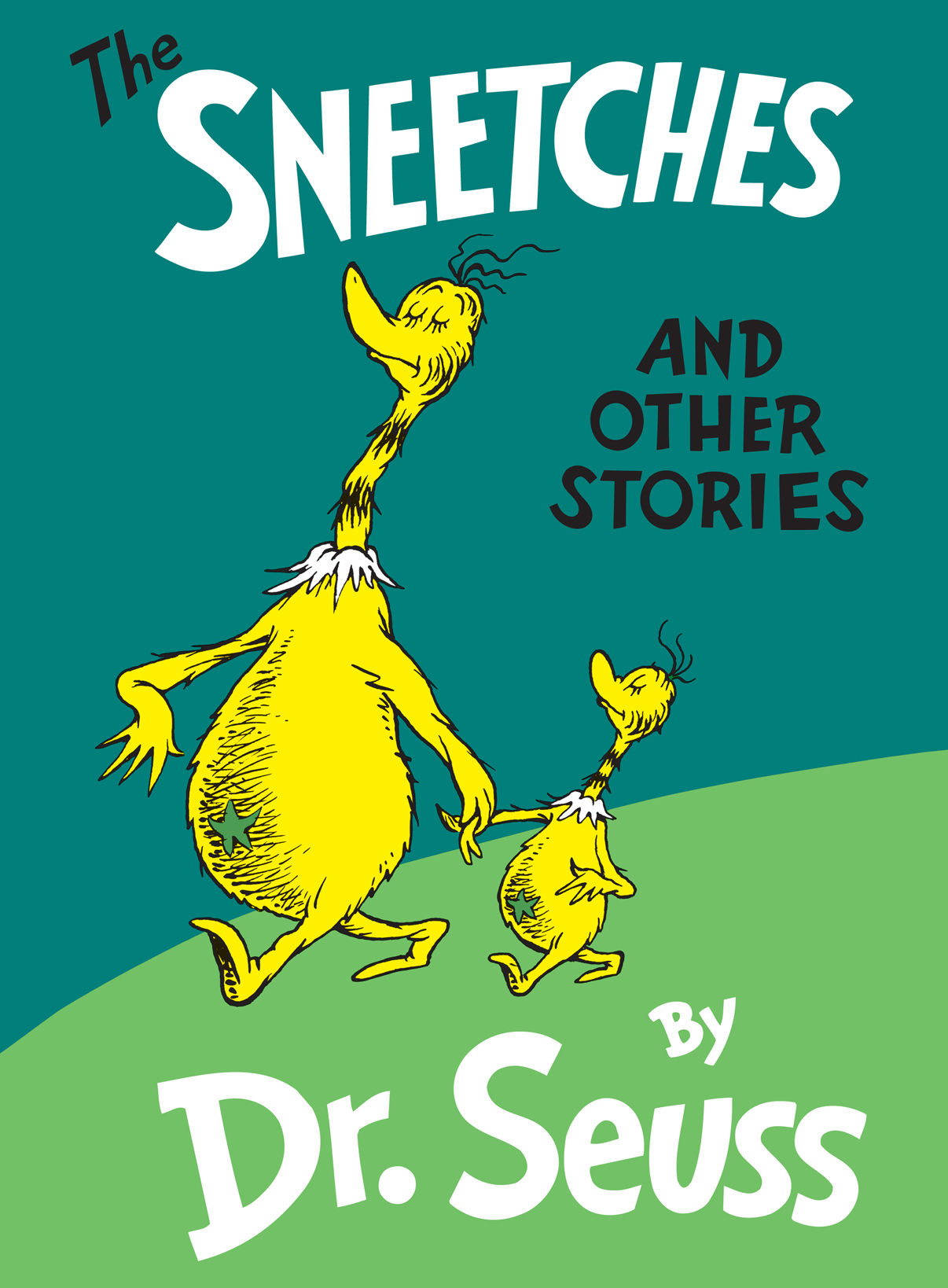
El Calor de Otro Sol Or: The Sneetches, Part II

“Frank. NEVER trust an Anglo.” That was the steely admonition of John. A Chicano, WWII US Navy veteran who took advantage of his G.I. Bill benefits to earn a college degree and purchase a Levittown-styled home in the southside of Chiques. Then as an Oxnard firefighter, he scaled the ranks to assistant chief. But before his training he sued his future employer because the outfit’s arbitrary height requirement, which he could not meet, had nothing to do with his ability, or that of other applicants of his stature, to perform the job. 

As I absorbed his directive with concentration, I thought to myself, “They [whites] aren’t all bad.” Why I grew up with a good number of them. Moreover, the best man at my wedding, Cody, was a white guy, one of the last americanos who lived in Mission Hills just across the way from San Fernando High. To this day, if I’d ever find myself in a jam or life-cycle moment, Cody tops the list of brothers to call. So, I trust him.

Then there are the Anglo teachers, coaches, advisors, and bosses—many of the Jewish persuasion—that treated me all right.

Nonetheless, I periodically ponder John’s counsel. Because there is a complexity behind it. In my research for Curious Unions and subsequent casual conversations we had as friends, John shared how one of his Anglo superiors worked to diversify Oxnard’s monochrome fire department. Conversely, he also relayed a weariness toward the city’s police, a force made up of largely white officers for much of the twentieth century. One story entailed how when he lived next to the city’s jail on A street as a boy, he often heeded the screams of tortured inmates.

Although I am conflicted about not trusting people of any demographic solely because of the society from which they belong, I understand where John (RIP) was coming from. As a person of the Mexican American Generation who came of age roughly between the years of the Great Depression and the Korean War, he and his cohort of Brown ethnics lived an in-your-face, apartheid-like reality much like that conveyed in the movie GIANT. Whites, the rich, kind of rich, and the hardscrabble class, like the uncouth Jett Rink, called the shots at the workplace, in government, and public spaces. And as Bick Benedict’s sister Luz did on screen, they barked orders at their “Mexicans.” Hence, an Anglo dictatorship viewed ethnic Mexicans, as a subordinate people created inferiorly by God—if there is one—to serve them. Los gueros also Orientalized, to use Edward Said’s definition, ethnic Mexicans as a generalized, static, and backward people—at best, when not selling drugs and violating women.

Therefore, John and his generation, as well as politicized Chicanas and Chicanos of mine, understood how white Orientalists fantasized Oriental representations of ethnic Mexicans in stereotypical ways, often with a presumptuous noblesse oblige, to materially privilege their tribe legally, economically, and spatially. To undergird their power further, Orientalists fabricated and inculcated a steady stream of myths, dishonestly packaged as history, to students and the public by way of fiction and film. The stinking badges scene in Humphrey Bogart’s 1948 movie The Treasure of the Sierra Madre comes to mind.

This settler colonialist “history” replete with lies and omissions centers white protagonists as nation saviors, redeemers, heroes, founders, and pioneers. I internalized this worldview in watching John Wayne movies of the Stagecoach, The Alamo, and the particularly laughable and offensive The Green Berets kind. Ethnic Mexicans, Native Americans, Blacks, and Asian characters, when recognized on the page or big screen, were depicted as marginal in Easy Rider, inarticulate like The Lone Ranger’s Tonto, and obsequious as Hop Sing in Bonanza.

Orientalists dictate representations. This is how power, and supremacy, work. It’s coded, not so subliminally, and normalized. This is why the lions must have their historians, as Chinua Achebe submits, so the glory of the hunt will not always be attributed to the hunter.

As I have aged, I more fully understand John’s wisdom. He lived in a societal system where Anglos were always the hunters and had been betrayed by them more than once, I’m sure.

As an educator, I have seen hunter, settler colonial, Orientalist forces in play, especially in the institution of curriculum (i.e., histories) as well as academe’s selection of the next generation of storytellers. For example, hunter Anglo tenure-track faculty, a numerical minority at my campus, California State University Channel Islands, exercise their supremacy in the formulation of courses and capricious criteria that privilege different sub-groups of their larger tribe while systemically disadvantaging Chicanas/os and other lions from historically underrepresented groups (HUGs).

A white professorate who dominates the ranks of the tenure-track faculty has authored courses that are essentially culturally irrelevant to the glories of Chicanas/os, Blacks, Indigenous, and ethnic Asian students. Indeed, centering the campus’s curriculum on the epistemologies of Chicanas/os and other HUGs students is unimaginable not only to most, if not all, Anglo faculty but also lion educators whose minds have been colonized by WASP knowledge systems. Unless learned in the departments of Chicana/o, Africana, Indigenous, and Asian American Studies, the epistemologies, cosmologies, and ontologies of peoples of color are never at the center of learning, if learned about at all…much like in the movies.

Oppressively Eurocentric hunter histories in the form of curriculum then serve as the required and preferred criteria of tenure-track job announcements tooled by settler colonial professors, often recent pilgrims from Northern, Southern, and Midwestern regions of the US with little to no consideration of the cultural capital of people of color. What they know of Chicanas/os, Blacks, Indigenous, and ethnic Asian American peoples is superficial at best. If they are experts in an area of study, they are prone to employ, as Said posits, Orientalist perspectives. Then this ruling class of faculty dominate search committees, like jurists in a courtroom trial, to select the next generation of colleagues that are racial reflections of themselves. The chosen often are ol’ boy and ol’ gal peers of graduate school and professional conferences. More insidiously, over the years, I have exposed job announcements patterned after the resumes of favored white applicants.

Furthermore, before the last five years, my university conducted a tenure-track recruitment process that was centralized. After two preliminary screenings, this entailed interdisciplinary search committees inviting three, sometimes four, candidates to interview on campus. As part of the recruitment of new tenure-track colleagues, existing Orientalist faculty mouthed rhetoric about the importance of diversity. Naively, wanting to be accepted, I trusted my Anglo faculty colleagues as I liked them and, I think, they liked me, for the most part, especially as I did not rock the campus boat at that time.

Then, circa 2009, a colleague in Chicana/o Studies pointed out to me that most academic departments across campus failed to invite HUGs applicants to interview on campus. And the few that did arrive were ultimately rejected. As I write this story, viscerally I am reliving the punch-in-the-gut emotion of betrayal when I awakened to the fact that most of my white colleagues spoke with forked tongues. They hired their own as this was where their tribal loyalty existed.

The intervention by my Chicana/o Studies colleague compelled me to think back to one ethnic Mexican candidate named Luis who interviewed on campus for a position in the Education department. As the recruitment process back then encouraged all professors, students, staff, community members, and administrators to observe the teaching demonstrations of candidates, I sat in Luis’ presentation as he was not only an ethnic Mexican but also trained at the Claremont Graduate University as I was. He lectured on the consequence of Paulo Freire’s learning theories and culturally relevant education for HUGs students.
After an analysis of Dr. Seuss’s book, The Sneetches, Luis described how our nation’s elementary schools debilitated the learning of ethnic Mexican grade-schoolers, both the US-born and migrant, by the ablation of cultural support systems. To prove his point, Luis broke down how entrusting parents escorted their children to their first days of school with mochilas metaphorically complete with the assets to communicate in both English and Spanish, knowledge of their rich history, and a strong identity of who they were. Straightaway, however, teachers at the classroom door seized from the mochilas of students these powers. Furthermore, schools grounded in a WASP settler colonial tradition did not celebrate or inculcate the danza, musica, and holiday traditions of the community they served. School systems, hence, excised the cultural connective tissue of chicanita y chicanito students, severely disabling their learning readiness from day one.

For young ethnic Mexican children to excel academically it behooved educators to embrace and center the cultural capital of language, history, and community of these students. As I account in Mexican Americans with Moxie, during the Chicano Movement, the Brown Berets of Oxnard understood this by staging a pedagogical intervention with the administrators and teachers of the Oxnard School District in the late 1960s. They pointed out to district officials that it was the teachers that were deficient, not the students. The Brown Berets then ran a tutorial program that centered a curriculum of the community, by the community, and for the community as an amour propre served as the foundation for learning excellence. A half century later, this model is mandated in California state law for high schools, community colleges, and universities as Ethnic Studies.

I was blown back by Luis’ lecture. He was perfect for the position. A shoe in, I thought. But disappointedly, I never saw him again. Another white candidate became my colleague instead.

No matter. The struggle continues.

All, however, is not so bleak. Incremental, steady progress is being made in the diversification of the tenure-track faculty with the support of white allies who get it, so to speak, and who wish not to play the role of an Orientalist. They are ok with supporting Chicana/os and other people of color centering their experience and expertise in the further development of a university that serves the needs of a student population of the 21st century.

And for this, I hold qualified trust as there still remain academic departments, despite their empty liberal rhetoric of inclusion, at CSU Channel Islands that have no Chicanas or Chicanos as tenure-track faculty.

C/S
fpb

Tuesday, June 14, 2022

Book Titles: From the Curious to Those with Moxie


A year ago, last week, I received author copies of Mexican Americans with Moxie: A Transgenerational History of El Movimiento Chicano in Ventura County, California, 1945-1975A month later, newly released paperback editions of my first oeuvre on mi tierra natal arrived, Curious Unions: Mexican American Workers and Resistance in Oxnard, California, 1898-1961. Between then and now, I have given several book lectures. Most remotely and not as many I would have wished largely due to Covid-19 restrictions…I like to think. If I am invited to talk at an institution (e.g., a college, library, or museum), I now customarily request an honorarium when it is not offered, depending on my relationship with the folk at a given venue. When I am asked how much, I respond that I am happy with an amount extended to previously invited authors of a similar caliber as myself. I know that I am no MacArthur “Genius” grant winner. But I also don’t want to be lowballed because I am a Chicano academic. Simply. It’s not about the money. It’s about respect.


For civic groups and classroom visits, I don’t require remuneration, especially if they are nearby. Years ago, a friend who led a non-profit that encouraged Chicanx youth to go to college presented me with a small box of chocolates after my presentation. Recently, after a visit with AVID[1] students, the teacher, a 1983 classmate, gifted me a smart, yellow Oxnard High alumni t-shirt. Both gestures made me feel appreciated.


After I am introduced on showtime, I cover the scholarly provenance of both my books since Mexican Americans with Moxie is a follow-up to Curious Unions. I explain how I converted my doctoral dissertation into the latter as this is the case of the first book for many, if not most, university historians. A good number of community studies in Chicana/o history were published in the late 1990s and early 2000s. Some are titled The Mexican Outsiders (Santa Paula), Labor and Community (Orange County), Making Lemonade Out Lemons (Corona)and The Devil in Silicon Valley (San Jose). Then there was Michele Serros’ fiercely witty Chicana Falsa and Other Stories of Death and Identity in Oxnard published in 1998Although not a work of history, when Chicana Falsa debuted, it inspired me to document my hometown’s ethnic Mexican past with similar righteousness. 

As my advisor at the Claremont Graduate University expressed her imprimatur for the project, I soon discovered a 1984 Labor History journal article by sociologist Tomás Almaguer titled “Racial Domination and Class Conflict in Capitalist Agriculture: The Oxnard Sugar Beet Workers’ Strike of 1903.”[2] In addition to its interesting, not so crypto, material analysis, a major takeaway from this social history is how a rare inter-racial union of Japanese and Mexican sugar beet workers and labor contractors—an even more exceptional partnership—successfully battled a fifty percent wage cut instituted by a rapacious cartel of white landowners. Later I learned that Carey McWilliams, a Colorado transplant and doyenne of California studies, titled a section of a chapter in his 1948 book, North From Mexico, “Los Betabeleros.” 

As I further researched and transformed my dissertation into a book manuscript, I wrestled with its eventual title. In the process, I found that other historians of my academic cohort had adopted catchphrases from McWilliams’ Southern California: An Island on the Land (1946) to headline their own books. For example, Matt García, a classmate of mine at the Claremont Graduate University, titled his first book on the ethnic Mexican community A World of Its Own: Race, Labor, and Citrus in the Making of Greater Los Angeles, 1900-1970 (2001). Four years later, Douglas Sackman completed Orange Empire: California and the Fruits of Eden (2005)Here are two excerpts from Southern California, respectively, that not only illustrate my point but also exhibit McWilliams’ trenchant prose: 

Throughout Southern California are many similar belts…This citrus belt complex of peoples, institutions, and relationships has no parallel in rural life in America…It is neither town nor country, neither rural nor urban. It is a world of its own.[3] 


Today “the orange empire” extends from Pasadena to San Bernardino through a series of evenly spaced communities, with the whole area being almost as densely populated as a city.[4] 


Hence, I decided that McWilliams’ nimble use of two specific words in the following account within North From Mexico would define my first book: “The growing of sugar beets is unique in that it represents ‘a curious union of family farms and million dollar corporations.’”[5] Therefore the title of my first book as the ethnic Mexican community of Oxnard developed many “curious unions,” in the form of collaborations with other ethnic and racial groups as well as civic and labor organizations making them assertive historical agents. 

Beyond the distinctive inter-racial formation of the betabelero Japanese Mexican Labor Association in 1903, ethnic Mexicans, for example, worked with whites and other communities of color in combatting police violence, the demand for equitable municipal services (e.g., streetlights, sanitation, and paved streets), youth programming, recognition, and the temporary cessation of the exploitation of braceros. Hence, the Curious Unions heading nicely alluded to a central premise of my book—that the ethnic Mexican community of Oxnard was central to the city’s cultural life as they were in no way outsiders in an “us against them” narrative. 

As I was finishing with the copy edits and gathering of permissions for Curious Unions’ eventual 2012 release, a collection of unused newspaper articles, documents, and interview material compelled me to write a follow-up book on the Chicana/o movement in Ventura County. As was the case in book one, for the second I wanted to further complicate peoples’ understanding of the Chicana/o Movement, particularly as it expressed itself outside of greater Los Angeles. After all, the ethnic Mexican communities of Fillmore, Moorpark, Oxnard, and Santa Paula had their own challenges with police brutality, protested the United States’ war in Vietnam, organized agricultural strikes, and struggled for educational justice not only like in East Los Angeles but also Delano in the San Joaquin Valley. 

Thus, I took advantage of the thrill in my completion of book one. I studied, yet again, the edition I had of Rodolfo Acuna’s Occupied America—the encyclopedic Before the Mayflower and Custer Died for Your Sins book of historians of Chicana/o history—to refamiliarize myself with the touchstone events and unaddressed questions of el movimiento. I also examined Acuna’s 2011 book The Making of Chicana/o Studies: In the Trenches which detailed how a significant number of San Fernando Valley State College (now named California State University, Northridge) students and faculty came from or ended up living in Ventura County. One alum of Valley State was Diana Borrego Martinez who I came to know through her father, Robert Borrego, who was civically engaged primarily, but not solely, in Santa Paula for decades. Each year, Robert and Diana visited a class I co-taught with a colleague in English on the youth movements of the 1960s and ’70s. 

As a result, I met with Diana at a Ventura coffeehouse in July of 2012. As we chitchatted before I pressed the record button of my mp3 device, I referenced a passage in The Making of Chicana/o Studies that detailed how United Mexican American Students (UMAS) at Valley State “consisted of about thirty students, and a dozen or so were hard core.” In the next sentence, Diana’s name was listed as one of those students. I asked her about her college experiences and what made her and her peers hard core activists. Diana looked down at the table to reflect upon the question. After a moment, she raised her head with a grin and replied, “You know, we had moxie.” 

Moxie. That word. It captivated me since I first heard college basketball play-by-play announcer Dick Vitale belllow it to describe frosh UCLA ballers in the 1990s: “They got moxie BABEEE!”

COURAGE, DETERMINATION. AGGRESSIVE ENERGY. INITIATIVE. That was the radical style of Chicanas and Chicanos. 

Consequently, as I considered the critical feedback of peer reviewers that recommended my second book manuscript for publication again with the University of Nebraska Press, I spent time thinking about its prospective title. Then, being that ethnic Mexican youth and young adults of the 1960s and ’70s were carrying on a tradition of resistance of leaders in their community of the Mexican American Generation, I realized that they, too, were Mexican Americans but with a moxie all their own. In other words, where many, but certainly not all, of the Mexican American Generation advocated on behalf of their community from an aspirational politics of middle-class respectability, comportment, and acceptance (sartorially imagine suits), the Chicana/o Generation carried themselves with a counter-culture savoir-faire. At the same time, however, this bearing, flare, mien, anger, if you will, was an adaptation of what their parents and elders role modeled but in a more measured manner, predominantly. It was part of a historical dialectic. So much so that a good number of ethnic Mexicans, consisting of US-born and naturalized citizens as well as long-term and recent immigrant Mexican nationals, embraced the Chicana/Chicano epithet. This was particularly true as working-class families with mixed citizenship and residency status demanded to be treated with dignity in terms of just wages and conditions in the fields, orchards, plants, and nurseries of Ventura County.

That is our history.

C/S fpb


[1] Advancement Via Individual Determination  

[2] The article was incorporated into Alamaquer’s germinal 1994 book Racial Fault Lines: The Historical Origins of White Supremacy. 

[3]Southern California, 207. 

[4]Southern California, 216. 

[5]North From Mexico, 166. 


Monday, June 13, 2022

El Calor de Otro Sol Or: Giant-A La SoCal, Part 1

Based on Edna Ferber’s 1952 novel, the film GIANT depicted mid-twentieth century life and society in Texas four years later. Although much of the Lone Star state’s cultural landscape applied to the rest of the nation. This entailed the quotidian oppression of ethnic Mexicans and Blacks, a bespoke racial regionalism, and thorny socio-economic transformation draped in a normalized veil of White Supremacy. A diner slugfest between freshly woke cattle baron Jordan “Bick” Benedict, played by Rock Hudson, and the bigoted proprietor who would not serve Bick’s ethnic Mexican daughter-in-law Juana, played by Elsa Cardenas, and his mixed-race grandchildren functioned as the tale’s climax. Racial capitalism won the pleito, btw. But the significance of the scene was not in the win or loss but in the fight itself.

The movie’s central take was the South’s racial capitalism as Anglos monopolized land, cattle, oil, and racialized labor. For example, in Bick’s Texas ethnic Mexican ranch hands of Reata obsequiously attended to the crows of Whites like Luz Benedict, Bick’s sister who enjoyed cattle rustling over making love. And in Virginia—the home state of Leslie Benedict, Bick’s wife played by Elizabeth Taylor—well-mannered Black servants answered the commands of plantation bosses from a more genteel tradition. The opportunity for upward mobility in this caste system existed only for working-class whites of ambiguous lineage. The hardscrabble alcoholic, Jett Rink, played by James Dean, mythically symbolized this trope. Nonetheless, in both the film and novel, no hint of resistance exists to the house of White supremacy on the part of Brown and Black agents. Vexingly, in the film only Whites could demand social justice—and only when racism demeaned new Brown family members, wearily accepted, such as Juana and her children.

The inhumanity of White supremacy in housing, healthcare, public facilities, and work (i.e., structural racism) conveyed in GIANT is also wrenchingly detailed in Isabel Wilkerson’s magisterial Pulitzer Prize-winning book The Warmth of Other Suns: The Epic Story of America’s Great Migration (2010). Through the harrowing migrant family stories of Ida Mae Brandon Gladney who relocated from Chickasaw County, Mississippi eventually to Chicago, Dr. Robert Joseph Pershing Foster from Monroe, Louisiana to Los Angeles, and George Watson Starling from Eustis, Florida to Harlem, Wilkerson narrates an in-your-face-racism that humiliated, subordinated, and disciplined southern refugees in multifaceted ways. Any Black person who contravened racist mores risked White public rituals of lynching that entailed gang rapes and beatings, torture (e.g., victims chained to cars and dragged through streets by the genitals), bodily mutilations, people burned alive, and hangings in town squares while White families entertained themselves in their Sunday’s best. Such acts of collective terrorism were not limited to the South as they took also place in the Midwest, North, and West against families who attempted to reside in uncrowded working-class neighborhoods such as the Chicago suburb of Cicero.

The dialectic of migration detailed by Wilkerson rhymed similarly with those of ethnic Mexicans from different parts of the US and Mexico. For example, the terrorist violence of outfits such as the Texas Rangers and Ku Klux Klan also compelled the migration of Black and Brown refugees to el calor de otro sols. Indeed, Wilkerson stated, “The people of the Great Migration had farther to climb because they started off at the lowest rung wherever they went. They incited greater fear and resentment in part because there was no ocean between them and the North…Thus, blacks confronted hostilities more severe than most any other group (except perhaps Mexicans, who could also cross over by land)….” Then there was the economic opportunity in the shipyards, auto plants, and meatpacking factories of places like Oakland, Detroit, and Chicago that recruited Black and Brown migrants before the Second World War. And once at a terminal point of their chain migration from one city and town to another over time, the transplanted set up socially supportive and protective migrant clubs and mutualistas, as did Whites from places such as Iowa, and held culturally restorative reunions.

I often reflect upon the Great Migration stories, Brown and Black, of my community while coming of age in Ventura County. Growing up I eavesdropped and listened to the accounts of my paternal and maternal great-grandparents and grandparents. On my mom’s side, my Abuelita guided her four young daughters from Chihuahua, Mexico as a single mother. My dad’s father migrated earlier in the century from Michoacan; from McAllen, Texas his mother’s family traveled back and forth from Chihuahua, Kansas, and Texas before settling in Rancho Sespe. I also often ponder the migrant, working-class narratives of families that lived in my Bartolo Square neighborhood of south Oxnard composed of a fairly balanced mix of ethnic Mexicans, Filipinos, Japanese, Blacks, and Whites. I periodically chuckle to myself when I remember my Black schoolmate, Steve, who lived down the street when he boasted one day on the playground that his family originated from Paris. “Wow,” I incredulously said to myself, “Steve’s family is from France?” After a brief pause, Steve clarified his assertion with a smile, “We’re from Paris, Texas!” Other Black families in my Bartolo Square neighborhood in south Oxnard, like Curtis’s, came from Mississippi and other states of the South. We got all got along—for the most part. Then there was the story of my paternal grandmother, Josephine, who shared with me how a Black farmer in McAllen, Texas had taught my great-grandfather, Santos Hernandez, how to read. Wow. Heavy.

From these accounts, I feel a certain connection to Texas and its people.

After my return to Ventura County in 2001 to begin my teaching career at California State University Channel Islands, I interviewed my first-grade teacher, Ms. Lillie Watkins, after some thirty years since being her student, for my first book Curious Unions: Mexican American Workers and Resistance in Oxnard, California, 1998-1961. In this conversation, I learned that she was originally from Indiana. Upon facing graduation from Ball State University in the late 1950s, Ms. Watkin’s sister was recruited to work at the Oxnard Elementary School District. Following her sister’s lead, Ms. Watkins accepted a position to teach first grade in the OESD. When Ms. Watkins and her husband arrived in Ventura County they searched for an apartment. And like many Black and Brown migrants in search of the warmth of different suns, they experienced how units open during a phone conversation suddenly became rented once they arrived to view them. Discouraged and angry, Ms. Watkins decided to return to the Midwest with her husband but was convinced to stay when supportive White colleagues helped find them a home. But not all co-workers were so kind as she discussed how one White teacher uttered the n-word under her breath in 1965 as she walked past her in the hallway. Oxnard not being the South, Ms. Watkins challenged this racist educator who denied saying anything.

As I presently read Wilkerson’s book, I wish I would have asked Ms. Watkins if her parents’ family migrated to Indiana from the South. I also would have asked what stories her parents shared with her and her siblings as they grew. Nonetheless, I am privileged to have had Ms. Watkins as one of my early teachers. As a Black educator, she not only taught me, patiently, how to read but also complicated my understanding of race in Ventura. Along with other Black teachers named Bloodworth, Calhoun, Datcher, Thrasher, Wilson, and White—as well as classmates with similar last names—I learned to value all people as people while recognizing, not denying, their race and cultural heritage. This is not to say that racial tensions did not manifest in Ventura County. But they were nowhere near the White-heat violence documented in places such as New York, Chicago, and many parts of the South…as far as I know at this moment.

C/S fpb

Sunday, October 10, 2021

Hispanic Heritage Month: A Perspective

Hispanic Heritage Month officially ends this fall on October 15 after a month of events commemorating the contributions of people from this demographic. It all started in June of 1968 when Southern California house of representative George E. Brown nobly spearheaded a resolution to right the omission of the contributions of a significant part of his constituency, ethnic Mexicans. The decree garnered 19 western cosponsors for a week-long acknowledgment. Subsequently, the administrations of presidents Lyndon Johnson to Ronald Reagan extended this fete to a month-long tribute as the electoral power of Spanish surnamed citizens swelled in our nation’s politics.


The yearly launch of this homage aligns with the independence anniversaries of Guatemala, Honduras, El Salvador, Mexico, Nicaragua, and Costa Rica from the Spanish empire in 1821.

(A girl works on a craft project at a Hispanic Heritage Festival at the Somerset (N.J.) Public Library in October 2015)


But I don’t pay much attention to Hispanic Heritage month even though I stand in fellowship with the people of continental America who continue a 500-year struggle against new forms of settler colonialism.


Why?


Because I and most ethnic Mexican compas, colleagues, and gente in communities of my ilk do not identify with Spain’s legacy of violence and exploitation in the Americas. Oh sure, I have known people, family even, who exalt their Iberian lineage at the expense of their indigenous ancestry. But I do not.


Ethnic Mexicans (citizens and migrants, the documented and undocumented) are people with a long history in America. In addition, self-identified Chicanas/os like me are conscious of our culture being historically rooted in sexual violence that encompasses many ethnicities and races: indigenous first Americans of the Western Hemisphere, Iberians (a good number expelled Sephardic Jews), Africans, Asians, and a range of European nationalities.


The early twentieth-century Mexican philosopher-politician Jose Vasconcelos conferred upon his people the cognomen La Raza Cosmica. Many outsiders of my culture gauchely translate raza to mean race. Most Chicanas/os don’t as it suggests a yeasty cross-cultural community of working-class people.


Other ethnic Mexicans adopt the Chicano epithet similarly. I recall how my politically moderate dad referenced with a gentle pride feisty ethnic Mexican crowds at Oxnard’s placita as la chicanada, the hoi polloi of which we belonged, as they enjoyed Cinco de Mayo and Mexican Independence fiestas or the city’s Salsa Festival.


As legendary journalist Ruben Salazar rhetorically asked in a February 6, 1970, Los Angeles Times op-ed titled, “Who Is a Chicano? And What Is It the Chicanos Want?, I aver that I am a Mexican American, with a “non-Anglo image…who resents being told Columbus ‘discovered’ America when…Mayans and the Aztecs, founded highly sophisticated civilizations centuries before Spain financed the Italian explorer's trip to the ‘New World.’”


Conscious of the cultural labyrinth of ethnic Mexicans, I also reject the “Hispanic” label, fabricated by strangers, as it eradicates the historical presence of my people in the Southwest.


The attorney turned historian Carey McWilliams aptly coined fairy-tale functions like Hispanic Heritage Month a fantasy heritage by which early twentieth century Anglo American boosters glorified the Iberian as a hegemonic ploy in the form of Santa Barbara Fiesta Days, the Ramona Pageant, Columbus Day, and real estate promotion such as the multimillion-dollar development of Spanish Hills in the Ventura County city of Camarillo when it was the Mexican that settled California.


(Granted branding exclusive neighborhoods in historical fact did not promise retailers the attainment of their California dream of hand-over-fist profits as they understood that a Mexican Hills designation would not appeal to prospective deep-pockets buyers)


McWilliams also recognized the Spanish fantasy heritage as a lie that erased the reality that ethnic Mexicans in the U.S. were here before the Anglo. Hence, they are not foreigners. When he published ostensibly the first Chicano studies book in 1948 North From Mexico: The Spanish-Speaking People in the United States, he argued that our nation’s European origins was first conceived in the Spanish colony in New Mexico in 1598 not the English Jamestown nine years later.


So, when ethnic Mexicans trek north from Mexico today, they follow a centuries-long migrant stream predating the Treaty of Guadalupe Hidalgo of 1848 that concluded a war instigated by the U.S. to acquire what are now the states of Texas, New Mexico, Arizona, Colorado, Nevada, and California.


And from different parts of Latin America and Haiti, refugees often flee repressive authoritarian regimes backed by our government to cross a synthetic U.S.-Mexico border born in nativism and brutality secured by guards on horseback, respectively, in the Johnson-Reed Immigration Act of 1924 and the Texas Rangers before the creation of the border patrol. Historian Monica Muñoz Martinez magisterially documents these truths in The Injustice Never Leaves You: Anti-Mexican Violence in Texas (2018).


During the Chicano Movement in Ventura County, intrepid activists such as Yvonne De Los Santos, Rachel Murguia Wong, and Roberto Flores teamed up with allies and peers in Los Angeles and Santa Barbara to insist that an inclusive curriculum that centered the history and culture of people of color be adopted in schools to make such a heritage month unnecessary. To publicize this demand along with others to redress the exploitation of farmworkers, challenge police brutality, dismantle school segregation, and end the war in Vietnam which Mexican American military troops experienced a casualty rate disproportionate to their numbers in the Southwest, Chicanas/os embarked upon the La Marcha de la Reconquista in the spring of 1971 from Calexico to Sacramento.


With self-determination, they marched northward six hundred miles from town to town not as Hispanics but as Chicanas and Chicanos. And that I can celebrate.


C/S fpb Meta of History, History News Network, Ventura County Star, Vida (Spanish), Vida (English)