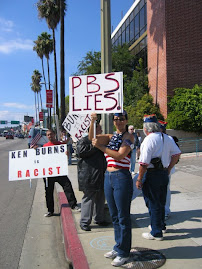
A Requiem for Rudy: A Ventura County Perspective
“Call Rudy. (123) 456-0911. Mary B.”
Circa 2003, I found this note in my campus mailbox at California State University Channel Islands (CSUCI). Mary B. was a family therapist, former Oxnard school board official, and an alumna, almost certainly in Chicano Studies, of San Fernando Valley State College (SFVSC) before it was renamed California State University at Northridge (CSUN).
The year before, Maria De La Luz, a colleague in the advising department at my campus, forwarded me and Lillian, a Chicana faculty camarada, a June 5, 2002, email from Dr. Rodolfo “Rudy” F. Acuña—with the subject heading California State University Channel Islands—originally sent to non-profit, private, and public Ventura County employees and managers in education, defense, healthcare, and law enforcement. Many people copied in the missive were Chicana/o Movement products of the 1960s and ’70s, a good number CSUN-Chicana/o Studies alumni like Mary B., for whom el movimiento never ended.
Rudy’s email expressed concern that CSUCI would not serve the needs of Latino students with Educational Opportunity Program (EOP) support and a representative contingent of tenure-track Chicana/o faculty to advocate on their behalf in the creation of the new campus. For this to happen, the startup university needed to be pressured as had been the case at CSU San Marcos. He admonished Chicana/o communities in Ventura County, especially his former students, to be vigilant as Luis Caldera, CSU Vice Chancellor for University Advancement, characterized them as complacent “Hispanics.” Ouch!
For many of his adherents, the email was like a fire bell in the night. An Educational Opportunity Program and Services coordinator at Oxnard College, expressed to me that the dispatch was a swiping to the faces of Rudy’s former students and friends to wake up and pay attention to what was happening in their community.
Rudy, with his close colleague, comrade in arms, and friend, Jorge, spoke at a downtown Oxnard venue named after him by Armando, a SFVSC-Chicana/o Studies loyalist: the Dr. Rodolfo F. Acuña Art Gallery and Cultura Center, Café on A. Topics of discussion were CSUCI, students in its service area, and the university’s political-economic significance in relation to the Chicana/o community. Groups from the cities of Ventura, Simi Valley, Santa Paula, Oxnard, Camarillo, Thousand Oaks, Port Hueneme, and other places in the county kept a close watch on CSUCI’s trajectory. Organizations included but were not limited to the: Latino Town Hall of Santa Paula, League of United Latin American Citizens (LULAC) of Ventura County, El Concilio del Condado de Ventura, Future Leaders of America (FLA), Central Coast Alliance United for a Sustainable Economy (CAUSE), and the Cabrillo Economic Development Corporation (CEDC). The provenance of these orgs and the people who founded them stemmed from el movimiento and ties to the Chicana/o Studies department at CSUN, especially Rudy. After I received Mary B.’s note, I called Rudy. He was gracious. We talked over the phone several times as he helped me in my transition from teaching at a community college to a university. He knew both systems as his first tenure-track gig in academe was at Los Angeles Pierce College before his full-time appointment at SFVSC in1969, one year after ethnic Mexican high school and middle school students walked out of East LA campuses in their demand of a culturally relevant education, college opportunities, culturally competent teachers that would serve them, and to be treated with dignity—no more punishments of humiliation (wearing dunce hats in classroom corners and mouths filled with soap and paste for speaking Spanish). Rudy often expressed in his writings that it was students who presented him with the opportunity to be a university professor. Consequently, his allegiance was to them.
Since my return to Ventura County in 2001, I’ve come to befriend Rudy’s disciples. For them, he was much more than their profe; he was their mentor, advocate, defender, loco parentis. Rudy took his students to conferences and demonstrations. He taught them to be activists and championed their interests and pursuits. Like so many Chicana/o faculty, his office was a sanctuary for students to visit and just be. In the early years of el movimiento, a place to hang out with elders of your tribe was vital, as only a handful of ethnic Mexicans attended universities. From his conversations with them, Rudy acquired intel on how his university served not only Chicana and Chicanos but all students, particularly first gens.
About five years ago, in the year 2021, the former president of CSUN visited my campus in her mentorship of a new dean while I was chair of the History department and Chicana/o Studies. Jolene had climbed the ranks of faculty and administrators of her campus; she also served as interim chancellor of the CSU system. As we talked, I mentioned my connection to CSUN’s Chicana/o Studies department and Rudy. She then warmly recounted how she witnessed Rudy’s fierce commitment to students. When students required support, he was there for them. She reminisced how Rudy opened his family’s home to a student in distress and requiring shelter. She also spoke of his monetary generosity for students and their causes.


Rudy was tough but also a softy, especially for his students.
At Chicana/o Studies conferences, symposia, and community events, I met people over time who knew or were students of Rudy. One person’s father knew him as a fellow academic on the rise during the heat of el movimiento. Ron recalled the lively parties of gente in the San Fernando Valley. One student shared how Rudy paid particular attention to him as a highly-at-risk youth. Rudy mentored Roberto and picked him up at his home to go to conferences and events. For Roberto, now a community college professor, Chicana/o Studies and Rudy saved his life. This is why Rudy was a champion of Chicana/o Studies; this area of study not only had the power to transform people to be agents of their own destiny, but it also saved lives, just as sports and the arts positively impacted others. Chicana/o Studies made people feel proud of themselves and their community. And when this happened, they had the chance to become the doctors, lawyers, civil servants, educators, and scientists that many became. For Rudy and his students, like Diana from Santa Paula, and who is a member of SFVSC’s first class of Chicana/o Studies graduates, there were no throwaways.
Rudy’s commitment went beyond the San Fernando Valley, as many of his students commuted from Ventura County communities. These Chicana and Chicano students were of a different sort, however, as they came from cities, towns, barrios, campos, and mixed environs that were simultaneously rural and urban, rurban, if you will. Fillmore was much different from Oxnard, and Oxnard existed in stark contrast to Thousand Oaks. With the City of Ventura, perhaps, interstice. In 1970, the Chicana/o community of Oxnard sued in federal court the Oxnard Elementary School District (OESD) for the unconstitutional racial segregation of Black and Brown students. In 1971, Judge Harry Pregerson found the OESD in violation of the Fourteenth Amendment and issued a summary judgement ordering the district to desegregate via cross-town busing, diversify its staff, and deliver a culturally relevant education to its students. This entailed the integration of an ethnic studies curriculum so that students saw themselves and their community in the subjects they studied. To adhere to the court order, OESD administrators, at the behest of Rachel Murguia Wong, a newly elected school board member, reached out to Rudy to provide in-service training to district employees. Although she was married with children, lived in north Oxnard, and already had a UCLA degree, Rachel enrolled at SFVSC to earn a Chicano Studies degree. It was at CSUN that she came to know Rudy and benefit from his mentorship.
As the district balked that it could not locate qualified ethnic Mexican teachers, Rachel, Rudy, and Jorge devised and implemented a program to home grow the needed educators for the OESD and other districts in Los Angeles County. It was called OPERATION CHICANO TEACHER (OCT). The program screened and trained SFVSC students to teach with pay as they earned their credentials. For working-class students this was huge. A critical mass of SFVSC Chicana and Chicano students were pipelined into the OESD. Many ultimately became school principals, district administrators, and professors of education. After their retirement, some created non-profit cultural centers in the barrios of Ventura County, the Inlakech Cultural Center, founded by Javier (aka Mr. G) an OCT product of the early 1970s, being one of them. Today, almost at every cultural celebration, UFW march, or protest you will find Inlakech’s youth Mariachi group performing with pride as they re-instilled this emotion to its audiences.
When there was a labor strike in the citrus orchards and strawberry fields of Ventura County during the1970s, Rudy organized SFVSC students to join the picket lines as Chicana/o Studies was not just an academic endeavor. It was a praxis grounded in community. He was also at the Chicano Moratorium on August 29, 1970, when Los Angeles County sheriff deputies and police stormed peaceful participants—mothers and fathers, children, and the elderly—wantonly swinging batons and firing tear gas. As Rudy attempted to deescalate a situation between his students and law enforcement, he found himself assaulted by the police and forced into the SFVSC bus with his colleagues and undergraduates while the police ignited a tear gas cannister in the vehicle and barricaded its door. The police also harassed Rudy and his students on their way to a meeting by pulling them over, searching them, and detaining them for hours. This treatment by law enforcement brought to life what they had studied in the classroom about the Texas Rangers, LAPD violence, and data presented in the Armando Morales’ 1972 classic Ando Sangrando/I Am Bleeding: A Study in Mexican American-Police Conflict.

When the MEChAs of Moorpark College and Ventura College reached out to Rudy to be a speaker for Cinco de May, Mexican Independence Day, or on a topic of controversy of the day, he was there. Rudy even participated in campus sit-ins with students and got arrested with them. In his eighties, he spoke at CSU Channel Islands in 2015 when MEChA de CI invited him to speak on his latest book at the time The Making of Chicano Studies: In the Trenches of Academe (2011). A room with sixty seats was jammed pack with people standing and sitting on the floor. A librarian mentioned the fire marshal as the room was filled beyond capacity. Half of the people in attendance were former students and friends of Rudy. The audience hung on his every word, especially those who listened to the Chicano Studies legend for the first time.
In the sense of Antonio Gramsci, Rudy was an organic intellectual of los de abajo, born and raised in a much more multicultural East Los Angeles, than today, with a mix of ethnic Mexicans, Blacks, Jews, and Asian residents. His parents were immigrants from Sonora and Jalisco. Consequently, he was a Mexican, an American—a Chicano all at once. As a US Army veteran, he experienced the virulence of US racism. NO DOGS NEGROES MEXICANS. The nation’s white supremacy informed his expertise as a teacher and academic. No matter the venue, he did not freight his messages with academic speak. Students related to his lectures because they held similar stories of their own or had listened to the oral testimonials of their families. In many ways, ethnic Mexicans who lived in the communities of Sunland, Sun Valley, Oxnard, Pacoima, Moorpark, etc., experienced the racial subordination portrayed in the 1956 movie GIANT. Maria T., a SFVSC Chicana/o Studies alumna of the early 1970s, and a retired public health administrator in Ventura County, who grew up in the City of Sunland stated to me that “Racism…It was blatant, and in your face” back then. Chicana/o Studies, Rudy, and his faculty colleagues taught her and her peers to be proud of being Mexican and to fight back, que no se dejen.
He was also a role model. Cognizant of his own myth, Rudy exemplified an impudently defiant resistance to a society that loved Mexican food but hated the Mexican. He calculated when to be a Chicano Studies Malcom X professor that complemented more amenable Mexican Americans with a politics of respectability mien when they jointly engaged the racist white power structure. Rudy knew that students needed to see Chicanas and Chicanos tell “The Man” where to go so they would be empowered to do the same when they left the cloistered halls of academe. Liars, especially administrators, must be called out as liars publicly when they told mentiras. Rudy made speaking truth to power with moxie a learning objective.
At CSUCI, Rudy’s legacy lives in its Chicana/o Studies department. He and his colleague, Jorge, shared course outlines and syllabi for me to consider in the creation of Chicana/o Studies courses at my campus. He, his CSUN ChS colleagues, and students, Jose and Louie M., collectively trekked to Camarillo for a meeting to imagine a CSUCI Chicana/o Studies degree program. Their presence was both practical and a political movida. When the university decided to replace the B.A. in Chicana/o Studies on its Academic Master Plan with a milquetoast Multicultural degree, Chicana/o Studies alumni and supporters rallied and successfully demanded its reinstatement. Jose M., one of Rudy’s protégé students, collected hundreds of signatures from around the country in a petition and presented it to the CSUCI leadership at an academic senate meeting. If it were not for Rudy’s influence in Ventura County by way of his extensive network of students and fans, there would not be a Chicana/o Studies program today at CSUCI. And there would not be a: ¡Si Se Pudo! commencement, Raza College Day, the Michele Serros Learning Community, Latina/o Santa Rosa Island Retreats, and other Chicana/o related programming.

¡Dr. Rodolfo “Rudy” F. Acuña presente! Rest in power. B. May 18, 1932-D. March 23, 2026
C/S fpb